My wife first noticed that I occasionally stopped breathing during sleep when I was in my early 40s. It was just really an observation at first. I ignored it. Other symptoms of sleep apnea such as fatigue did not exist. Most of the time I thought I was waking myself up with the noise. This Episode relays my sleep apnea screening tests, the first treatments for snoring and the sleep test results.
The First Sleep Apnea Test
My Sleep Apnea was getting worse, although I still didn’t show any other symptoms. At 53 things were getting quite bad. My snoring had always been loud, but the erratic breathing and snoring was really causing my wife concern. She finally persuaded me to go to the doctors for a check-up.
I felt embarrassed going to the doctor to discuss snoring. The doctor asked two sets of questions relating to how tired I was. He didn’t explain the screening tools he used. If he had, the name STOP Bang would have given me a BIG clue.
STOP bang
The STOP Bang test is a set of eight questions and gives a risk score.
STOP = Snoring, Tiredness, Observed apneas, Pressure (blood pressure)
Bang = BMI, Age, Neck circumference, Gender
Epworth Sleepiness Scale (ESS)
This measures daytime sleepiness, not apnea directly. It asks how likely you are to doze off in everyday situations. For example, would you fall asleep in front of the TV or reading a book.
The Symptoms hid the Severity of the Sleep Apnea
The Doctor concluded I had mild sleep apnea. The symptoms were probably amplified by having a young daughter. He referred me to a sleep clinic with “mild sleep apnea.” In hindsight severity was wrong.
As time went by my wife became increasingly concerned with my breathing. When I stopped breathing my face would also turn red. My mood declined, especially in the evenings and the fatigue was starting to get to me mid-afternoon. I could easily go to sleep at any time of day.
Twelve months after the Doctor’s assessment and still no appointment from the sleep clinic. I guess they triaged me behind others with Severe Sleep Apnea. We had in any case now moved. So I had to start again with a different hospital.
My first Mouthpiece (Mandibular Device)
I considered purchasing a CPAP (Continuous Positive Airway Pressure) but articles suggested that choosing one without clinical advice could be dangerous. So I purchased an Oniris Mandibular Advancement Device. The mouthpiece attaches to your teeth and pushes your lower jaw forwards to open the airways in your throat. The Oniris “boil and bite” device requires you to mould it to your teeth yourself. Which involves placing it in boiling water and then putting it in your mouth and biting hard on it. You only get one shot at creating the mould.
You can liken the Oniris mandibular device to a boxer’s gum shield. It was unbearable. Not sure what I was expecting but I should have done far more research. I could only bear it in my mouth for about 10 mins. But when I tried breathing with it, I could tell the concept was going to work.
A Second Sleep Apnea Screening Test
Eventually after significant pressure from my wife, I engaged my private medical company and was referred to consultant ENT (Ears Nose and Throat) surgeon Mr Anthony McGilligan. A wonderful chap who truly knows his stuff. He ran through the Epworth and STOP Bang questions and carried out a flexible endoscopy. I scored 6 on both tests and the endoscopy showed no abnormalities.
We discussed mouthpieces. I shared my view that the device worked for me it was just that it was too uncomfortable. He suggested two routes. First, meet his sleep clinic colleague and second to discuss the mandibular device with an appropriate dentist. Unfortunately, my private health wouldn’t agree to fund the private sleep clinic. And by some coincidence my appointment via the NHS came through at the same time, albeit ten weeks away.
Because the appointment was 3 months away and assuming that subsequent treatment would be an equal wait, I contacted a dentist.
A professionally fitted Mandibular Device.
Smileworks were my first-choice dentist. Their reviews were great. They didn’t disappoint. From the very beginning their service was impeccable. Such a wonderful experience.
The dentist discussed various options, so I fully appreciated the process and the cost. Understanding the urgency, they offered an alternative to their usual device. The fitting process of the Erkodent mouthpiece was on another level of accuracy from the Oniris mandibular device.
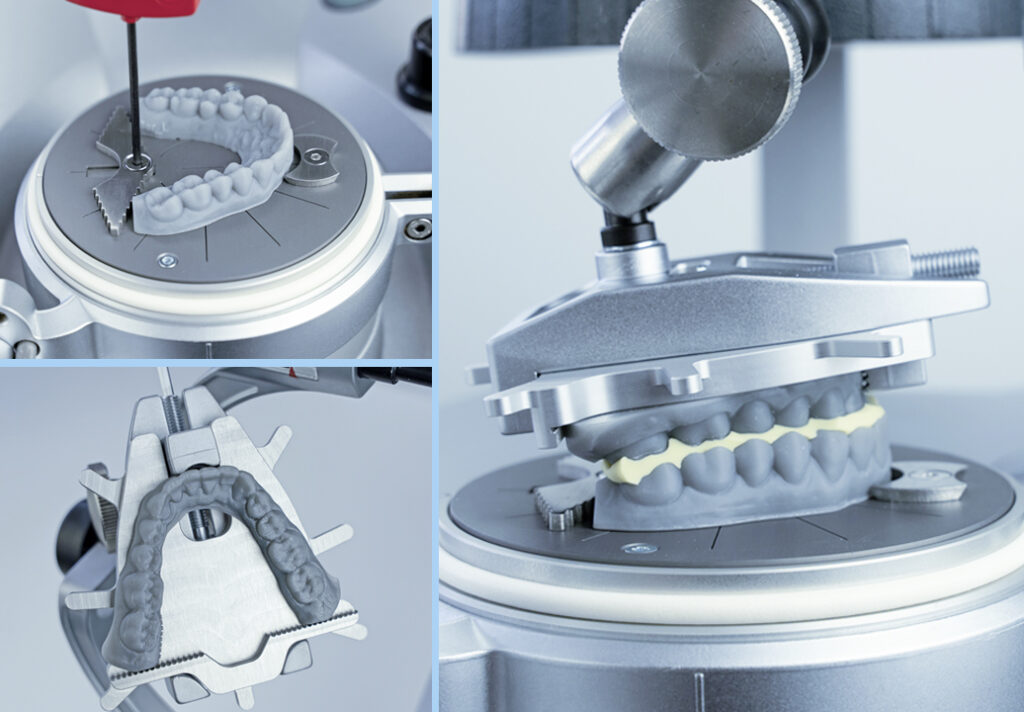
They took a 3D digital image of my teeth so the manufacturer could create a precise mould and a few weeks later it arrived. It was 1000% better than the Oniris mouthpiece, although slightly more expensive. It was worth every penny. It helped reduce the snoring.
The Sleep Test Monitor
Eighteen months from the original doctor’s diagnosis the sleep clinic appointment came through. Assuming I would be staying overnight in the “sleep clinic,” I was pleasantly surprised when they told me I would take home a monitor. I was expecting it to be similar to the metabolic cart – a face mask, tube and a set of pads and wires.
It was a tiny non-disruptive thing that bizarrely fitted to the end of my finger. How on earth was this thing going to check my breathing. Fitting it to scan my nail at first I thankfully turned it the correct way.
The question was do I leave my mandibular device in during the test or give it the full snores and leave it out. I decided to do both so the clinician could share the comparative results and hopefully declare the mandibular device a success.
I put it on and fell asleep immediately, as usual these days. Waking up for a midnight pee, I popped in the mandibular device and fell asleep immediately, again.
The next day I dropped the little sleep test monitor back at the hospital reception. I was still puzzled about the whole process.
Within a few days I got a call to go to an appointment to discuss the results the following week. Wow, they must have found something. The NHS only gives out quick appointments if things are serious and they were.
The Results I Stopped Breathing
Feeling a mixture of nervousness and excitement, I arrived an hour early for the appointment. Edwin the sleep clinician called me through and to be honest I don’t remember his opening lines. I do remember some of the statistics.
My breathing had 44 obstructions per hour
The longest obstruction lasted 87 seconds. Oxygen saturation was 55%.
Edwin explained.
“If you were on a ward and I saw that Oxygen reading, I’d hit the emergency button and you would be surrounded by nurses.”
I was shocked. He went on to put the other results into context.
The Apnea Index reading was 44. Mild is considered 5-15 and severe is over 30.
Longest Obstruction was an “impressive” 87 seconds.
“You stopped breathing for 87 seconds.”
The whole appointment lasted an hour. Edwin was so professional, not once emotional, nor critical he just calmly delivered the message.
People can show severe signs of fatigue when the actual severity is low. In my case the severity was high, but the symptoms were low.
He said I would receive a CPAP device. And he got a mask out and helped me fit it.
The results didn’t really sink in until I got home and did some research. This was not in any way mild sleep apnea this was severe. My breathing stopped 44 times per hour and for up to 87 seconds!
You can probably guess what the equally staggering findings are in the next Episode.
Episode 4 CPAP Treatment and its Effect on Blood Pressure
Previous episodes/