Before we look at the results of the CPAP treatment. Let’s start with a little recap. Ive been snoring for as long as I can remember. On my 40th birthday my blood pressure was 198/111. Between the age of 40 and 45 I exercised regularly and changed diet and yet each year I had to increase my medication to manage my blood pressure. And for almost 20 years the Diastolic level kept hovering just above 95
My Statistics a Week before the CPAP Treatment
- Average Blood Pressure 144/94
- Medication 10mg Ramipril 10mg Amlodipine 1 mg Doxazosin
- Airway Obstructions 44 per hour, Oxygen Saturation 55% and longest Obstruction 87 seconds
Connecting High Blood Pressure with Snoring
It’s apparently quite common that doctors don’t enquire about sleep apnea symptoms with patients who have high blood pressure. I’m disappointed that on a couple of occasions Doctors had said that they were not sure why the blood pressure kept rising and yet didn’t explore sleep apnea symptoms.
The NHS simply state the following and as a patient you assume the serious problems are stopping breathing completely.
“Sleep apnoea is when your breathing stops and starts while you sleep. The most common type is called obstructive sleep apnoea (OSA). Sleep apnoea needs to be treated because it can lead to more serious problems.”
In the US the definition is more helpful
“Sleep apnea is a disorder that causes people to stop breathing for short periods during sleep. These periods are called apneas. Apneas usually last between 10 and 30 seconds. In severe cases, apneas can happen many hundreds of times each night. People with untreated sleep apnea are more likely to develop high blood pressure.”
The sleep clinician mentioned that some of his patients saw a drop in blood pressure to the extent they could drop one or two of their tablets after a few months. Especially those on three, like myself.
Resmed Airsense 11
The final part of my visit to the sleep clinic was to try out the CPAP machine and mask. The mask was a lot more comfortable than I was expecting. The clinician asked if I had kids, because I should warn them that Darth Vadar may be in the bedroom at night. I liked to think of it more as a pilot’s mask than Darth Vadar’s. What would you call it?
Once it was fitted, Edwin gave it a test run. It’s a bit of a surprise at first but it soon becomes comfortable. The slightly disconcerting part was the “seal test” which pushed the pressure up to 10 psi to test for air leaks.
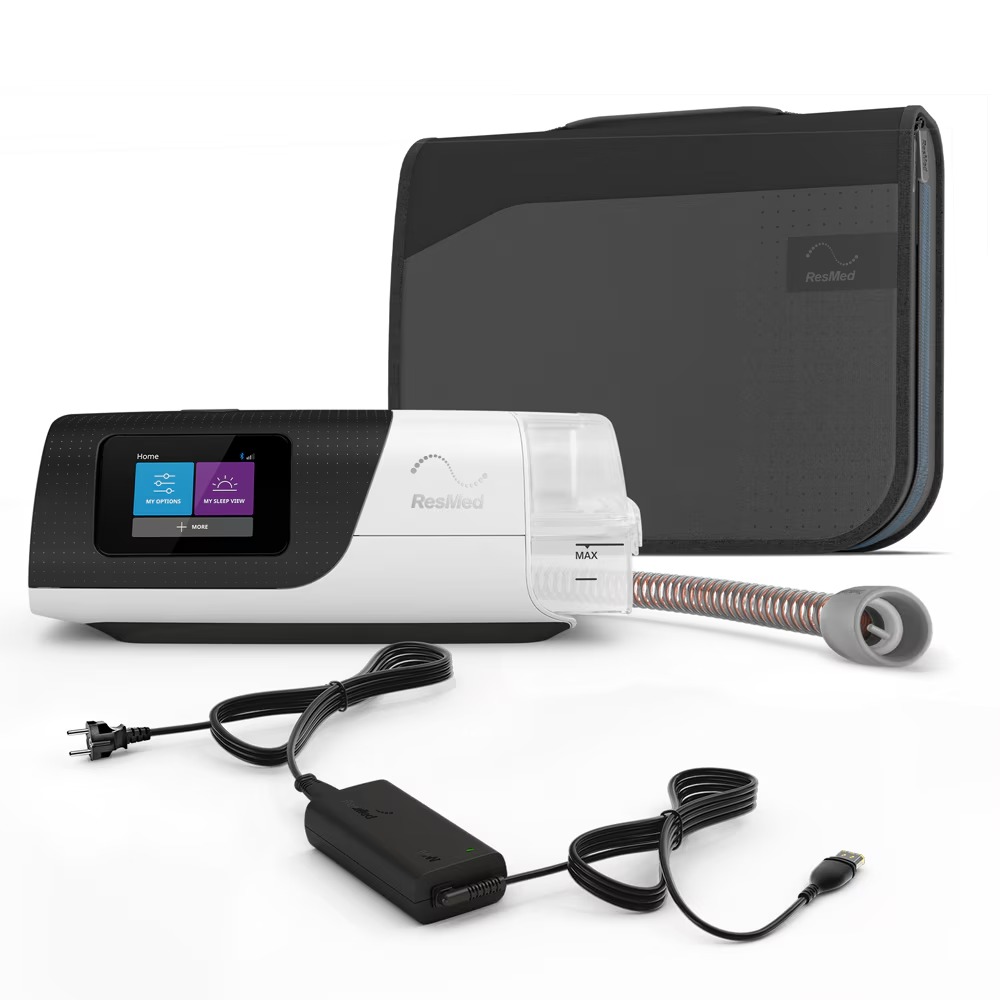
I left the sleep clinic with the CPAP device in its little carry bag. Very pleased with the service and pleasantly surprised the NHS provided such great kit. I was quite shell shocked with the results so sat for a while to contemplate what just happened.
My First Night’s Sleep in a CPAP Mask
Setting up the CPAP device was very easy. Plug the tube into the back of the machine, fit the mask and plug the air tube into the mask. The air flow starts automatically. It connects to your phone so you can easily monitor progress and it sends data back to the clinic for them to analyse.
So, I sat back and eight hours later I woke up.
My wife immediately noticed the difference. I didn’t look as drawn, my neck had tightened up, I generally looked better. Not surprisingly I felt hungover. I had slept deeply for the first time in years (literally).
The Results
I sat down and gingerly took my blood pressure.
It was 128/83, it couldn’t be correct. I took it again, 127/80. I nearly cried. Since I first started taking my blood pressure 20 years ago, I had never seen a reading that low. It couldn’t be true; my blood pressure monitor was after all at least 10 years old. So, I purchased a new funky one that connects with my phone. The new Omron confirmed the dramatic drop in blood pressure.
I discussed the readings and CPAP treatment with the medical centre pharmacist to see if I could drop the Doxazosin – they agreed. I was back to two tablets within the first week!
Another week into the treatment and my blood pressure readings were averaging 114/76. Another call to the pharmacist and they agreed to drop my Amlodipine to 5mg. The pharmacist was surprised when I told him the background of my high blood pressure being caused by snoring – he asked….
“How did you connect the two?”
I laughed.
“Precisely why I am writing this blog, to help others do exactly that”.
My Statistics after Two Weeks of CPAP Treatment
- Average Blood Pressure 124/83
- Medication 10mg Ramipril, 5mg Amlodipine
- Average of 8 hours sleep and 3.9 events per hour
Update – Statistics after Five Weeks of CPAP
- Average Blood Pressure 122/80
- Medication 10mg Ramipril
- Average of 8 hours sleep and 1.7 events per hour
- One week of rowing 2500k per day
What Next?
Now that my body is receiving oxygen at night, there is a longer future ahead, I am sure. I plan to experiment with different CPAP masks, pillows and track the impact on comfort and quality of sleep. And of course I will keep track of my blood pressure.
That’s all for now folks. If you have found this blog interesting and want to see how things progress then subscribe to the blog. I will be posting updates as the CPAP treatment progresses.
Mr P’s World will also be publishing more blogs in the future. All with the intent of sharing my experiences to help you benefit from them.